Medellín, Colombia
Dental implants and All-on-X in Medellín
A guide for US patients who are comparing this city. It is not a ranking of the city, and it is not a list of clinic packages.
Updated 23 November 2026
US patients ask about dental implants and All-on-X in Medellín. Most pages that answer are price tables for clinics. This one is about the decision: who is at the chair, what the treatment actually involves, what a price is made of, and what you do after you get home. We are not arguing that Medellín is the right place to go. The same questions apply in Bogotá, Cartagena, San José, Tijuana, and a dentist near home.
The CDC says that each year, millions of US residents travel to another country for medical care, most commonly to Mexico and Canada, and that dental care is one of the common reasons. Cost is on that list, as a treatment that may be cheaper somewhere else. “May be cheaper” is not a score for Medellín, and it is not a number we can print without a fee survey.
The dentist, not the building
A clinic brand is a sign on a door. The person who places the implant is the file. RatedDocs verifies that dentist. We do not verify a clinic name, and a dentist does not personally vouch for a clinic through us. Verified means we cleared all six checks on that person. There is no partial score. Payment does not buy the word Verified.
If two dentists work in the same office, they are two files. Ask who will be at the chair for the surgery, and who you will see if you come back. An airport pickup, a hotel, and a receptionist who speaks English are logistics. They are not the sixth check.
What to check before you book
Medellín does not replace the national registry. In Colombia the national authorization to practice a health profession is inscription in ReTHUS, the Registro Único Nacional del Talento Humano en Salud. The Ministry of Health and Social Protection describes that inscription, under Law 1164 of 2007, as the step by which the person is authorized to practice. The ministry says citizens can check whether health personnel have met the requirements, and that the registry also carries sanction information for medicine, dentistry, and nursing when an ethics tribunal has reported it. The public form (ReTHUS public query) asks for an identification type and number, or a name and surname. Search the full name, ask the dentist which identification the row uses, and read the row yourself. A clinic tax number is not a ReTHUS row. A row that authorizes the profession is not a count of full-arch cases.
Look it up yourself on the Ministry of Health, ReTHUS. We do the same kind of check, against the issuing authority, before we use the word Verified. You should still read the record. Our review is not a substitute for looking at the name on the plan.
The six checks, in plain language:
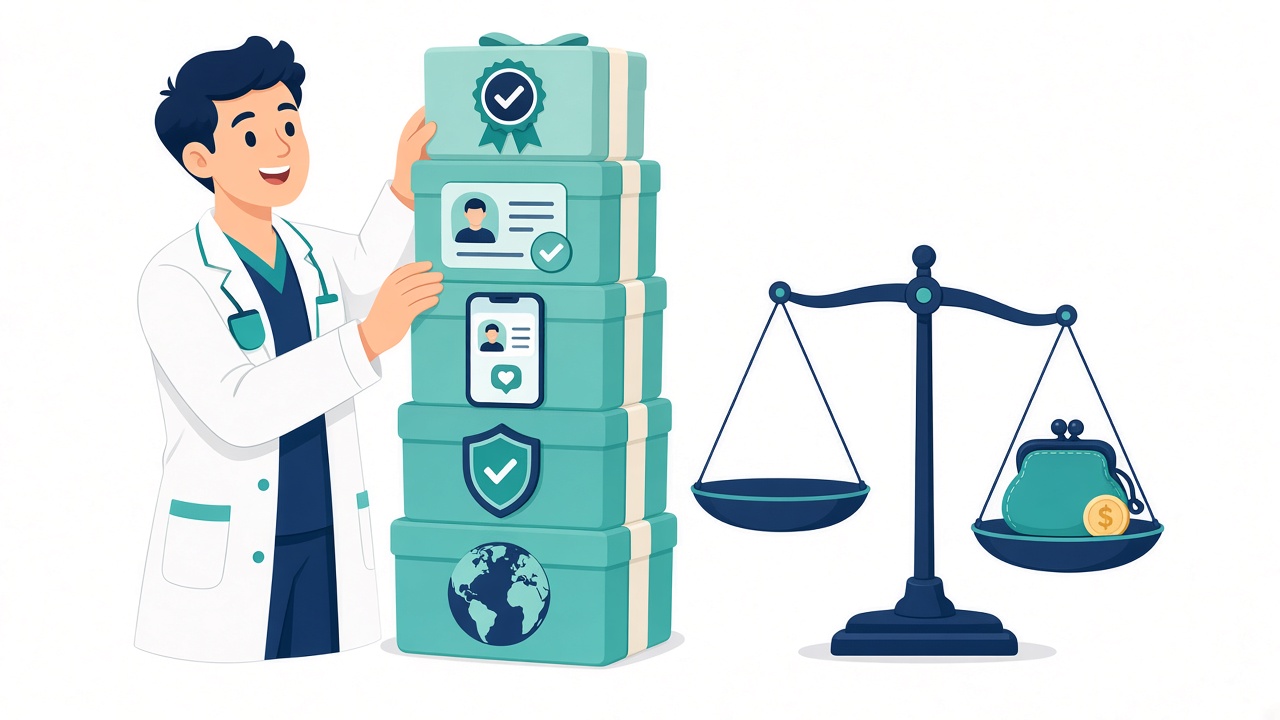
- Active professional licence. Registration confirmed with the authority that issues it. In Colombia, that search starts at ReTHUS, above. A city does not get a private substitute for the national registry.
- Sterilization protocols. A walkthrough of the process and a written protocol. A photograph of a tidy room is not a protocol.
- Procedure-specific education. Training that matches the treatment on the plan. “Implant dentist” on a homepage is not the document.
- Original before-and-after cases. Photographs that belong to that dentist. Another clinic’s smile, a stock photo, or a generated image does not count.
- Named materials. The implant system and the tooth material, in writing. The FDA tells patients to ask for the brand and model and to keep that record. “Premium implant” is not a brand.
- A written warranty and aftercare. What is covered, what is not, how long, what you have to do (hygiene, a return visit), and where the repair happens. We require the document before a dentist can be Verified. We do not write the warranty, and we do not pay it.
All six pass, or the dentist is not Verified. The longer explanation is on how verification works.
What All-on-X actually is
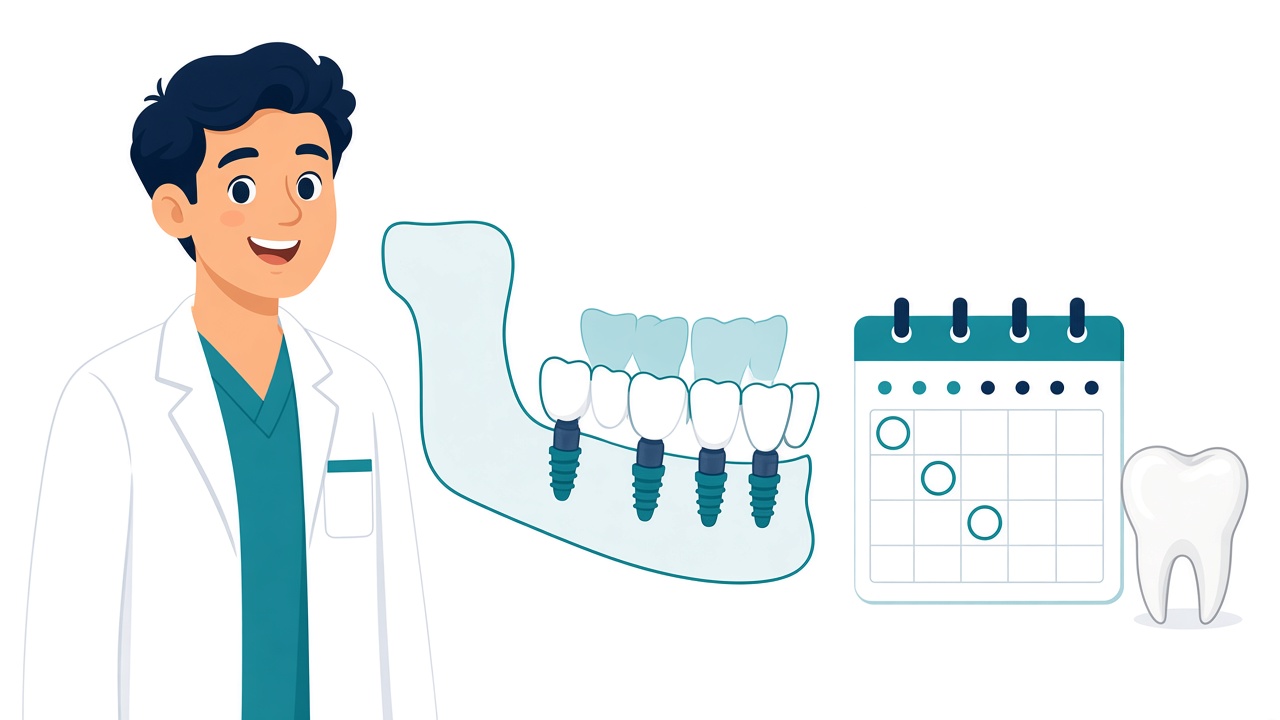
All-on-X sounds like a sequel. It is a blank. The X is how many implants hold one jaw of teeth. All-on-4 is four. All-on-6 is six. The number is a clinical decision, not a rank, and it can differ for the upper jaw and the lower jaw. A quote that says “full mouth” without saying which jaw, and how many implants in each, is not a plan yet.
All-on-4 is also a published protocol, not just a slogan. In 2003, Maló, Rangert, and Nobre reported it for completely edentulous lower jaws: 44 patients, 176 immediately loaded Brånemark implants, and a fixed acrylic provisional planned within 2 hours (Maló et al., 2003). Before the 6 months follow-up, implant survival in that series was 96.7% in the development group and 98.2% in the routine group. Prosthesis survival was 100%. That is one retrospective series of lower jaws. It is not a success rate for Medellín, and it is not a promise for you.
The upper jaw was a different paper. In 2005 the same authors reported 32 patients and 128 immediately loaded implants in completely edentulous maxillae, with the provisional planned within 3 hours (Maló et al., 2005). At one year, cumulative implant survival in that series was 97.6%, and the average marginal bone level was 0.9 mm (standard deviation 1.0 mm) from the implant-abutment junction. Read the percent next to the sample size. That series is not a success rate for a city.
A 2024 review of that 2003 lower-jaw protocol says the definitive prosthesis was installed 4 to 6 months after surgery. The same review describes conventional osseointegration as about 4 months in the lower jaw and 6 months in the upper jaw, and it uses “immediate loading” for a prosthesis placed immediately or within 48 hours. The bone did not read the brochure. A same-day provisional, when the plan includes one, is not the final tooth, and it is not the end of healing.
A single implant is a different timeline. The FDA says healing of the implant body may take several months or longer, and that you typically have a temporary abutment during that time. Do not let a full-arch advertisement and a single-tooth advertisement share one calendar. Ask, in writing: which jaw, how many implants, whether teeth come out the same day, whether those teeth are provisional or final, what they are made of, and how many visits the dentist actually wants.
The 2003 protocol is two stages: surgery with a provisional, then a definitive prosthesis months later. Your plan might add a planning visit before any of that. A “one trip” offer should say whether you leave in a provisional, and who makes the final teeth. All-on-6 is not the 2003 protocol. Its visit schedule has to be on your plan, not borrowed from a four-implant paper.
What actually changes the price
We are not publishing a Medellín fee table. Marketplace pages do, usually from partner clinics, and the ranges do not agree with each other. Repeating them would pretend we had measured the city. We have not.
What we can show is how a US single-tooth fee is built, so a package price has something to be compared with. These are national mean dentist charges, all provider types, for April 2023 through March 2024, before network discounts. They come from FAIR Health data published in Miller et al., JADA, 2026, eTable 2. They are not what an insured patient pays out of pocket. They are not a Medellín price. They are not an All-on-X price. A full arch is not “four times D6010.”
| Code | What it is | Mean charge |
|---|---|---|
| D6010 | Surgical placement of the implant body (endosteal implant) | $2,343 |
| D6056 | Prefabricated abutment, including modification and placement | $744 |
| D6057 | Custom abutment, including placement | $990 |
| D6058 | Abutment-supported porcelain/ceramic crown | $1,635 |
| D7140 | Extraction of an erupted tooth or exposed root | $211 |
| D7953 | Bone replacement graft for ridge preservation, per site | $679 |
| D6011 | Second-stage surgery: access to an implant body | $389 |
The same paper’s Figure 2 lists the definitive abutment and crown (D6056 through D6058) as $2,379 to $2,625, prefabricated abutment versus custom. The abutment choice moves the fee before anyone argues about cities. So does an extraction, a graft, a second-stage visit, sedation, imaging, the provisional, and the material of the final teeth. The FDA notes that most dental implant systems are titanium or zirconium oxide. Which one, and which manufacturer, belongs on the quote.
A written quote is comparable when it answers the same lines:
- Which jaw, or both, and how many implants in each.
- Extractions, grafts, or a sinus procedure, as their own lines or explicitly included.
- Brand and model of the implant system.
- What you wear home (provisional or final) and what the final teeth are made of.
- How many visits, and whether the later visit is in the price.
- Imaging, medication, sedation, and the lab, included or not.
- The warranty: duration, what failure it covers, and where the repair is done.
Add the cost of getting there and of care after you are home. The CDC says follow-up for a complication might be expensive and might not be covered by your insurance. A low surgical fee that assumes you will not need anyone in the US is not the whole price.
Getting there, staying, and going home
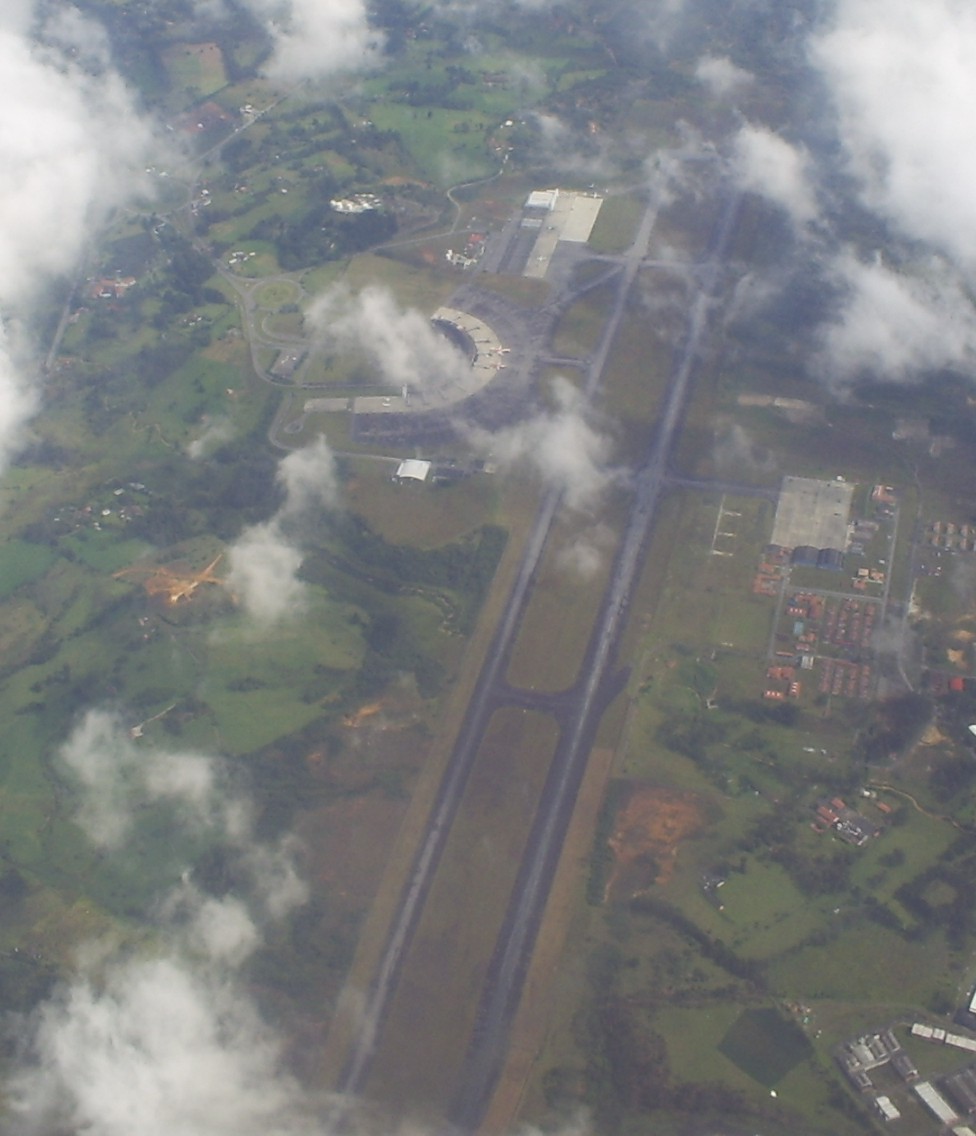
The passenger site for Aeropuerto Internacional José María Córdova gives the address as vereda Sajonia, Rionegro, Antioquia (José María Córdova airport, how to get there). The airport is not in the municipality of Medellín. A hotel in Medellín and an office in Rionegro, or the reverse, are different rides. Ask which municipality the chair is in.
The same page describes the trip from Medellín: buses, shared vans, and taxis from the Sandiego roundabout, on the road toward Las Palmas, which it says run to the terminal through the day and night. It also describes the northern and southern bus terminals, at the Rionegro windows, for a direct route. From the town of Rionegro it describes taxis and local buses near the park, in front of CEDES, starting at about 4:30 a.m. and ending around 9:30 p.m. Those “about” times are the airport’s wording. Back toward Rionegro, it points to taxis at arrivals door 3 when flights are operating, and to buses from about 5:00 a.m. until about 10:00 p.m. A late landing plus a plan that only works on the Rionegro local bus is a logistics problem. Recheck the page.
The later visit, if the written plan has one, is another flight into Rionegro plus that ride. The city limits do not change the healing interval in the studies above. We are not publishing a Medellín package length, and we are not inventing a drive time the airport page did not print.

How long to stay is the dentist’s written visit list, plus a margin before you travel if you are sore, medicated, or still bleeding. We will not invent a “7 to 10 day package.” Ask how many nights they want you nearby, what would make them ask you to stay longer, and who you call if something hurts the day after you leave.
Before you go, the CDC suggests seeing your own clinician or a travel-medicine clinician at least 4 to 6 weeks ahead, arranging how you will communicate if you do not share a language, and carrying copies of your records and medicines. It also says accreditation of a facility does not guarantee a positive outcome. Bring home copies of the records, the images, the brand and model, and the warranty. Tell your dentist at home that you are going, and ask whether they will see you when you are back.
Risks, and what actually lowers them
Every implant placement has risk, in Medellín and at home. The FDA names complications that can show up soon or much later. Implant failure, in their definition, usually means the implant is loose or lost, and fixing it can mean another surgery. The risks they list include damage to neighboring teeth, sinus perforation, fracture of the jaw, a bite that does not feel right, an abutment screw that loosens, difficulty cleaning around the implant, untreated gum disease, and numbness if a nerve is injured. They also note that infection is more likely when diabetes is not controlled, and that delayed healing is more likely if you smoke. Smoking may reduce the long-term success of the implant.
The CDC adds the risks of care in another country: wound and bloodstream infection, drug-resistant organisms, licensing rules that may differ from the United States, counterfeit medicines or lower-quality devices in some places, and misunderstandings when you do not share a language. None of that is a verdict on Medellín. It is why the checks are about one dentist’s documents, not about a country.
What reduces risk is mostly unglamorous:
- Read the licence record yourself, then ask if that is the person operating.
- Get the brand, model, and the written warranty before you pay a deposit.
- Get the visit list, and which teeth are temporary.
- Tell your dentist at home, and decide who sees you if something fails after you return.
- If you smoke, or if diabetes is not controlled, say so before anyone promises a calendar. The FDA names both.
- Follow the cleaning instructions. The FDA treats hygiene as part of long-term success, not as an afterthought.
Verification does not remove those risks. A Verified dentist has a complete file. The file is not a prediction of your result. This page is general information, not a treatment plan. The clinical disclaimer says the same thing at more length.
How to choose without a ranking
Compare plans, not cities. Put two written plans next to each other and check the lines in the price section above. Then talk to the dentist who would do the work, not only to the person who answers the phone. If the plans are in different countries, the questions do not change. The same exercise applies in Bogotá, Cartagena, San José, Tijuana, and a dentist near home. It is not a podium.
We list a dentist on a page like this only when all six checks are cleared and the public profile is live. The link goes to that Verified profile. We do not fill the gap with dentists we have not reviewed.
Questions we hear
- What does All-on-X mean?
- All-on-X is a nickname for a full set of replacement teeth on one jaw, held by some number of implants. The X is that number. All-on-4 is a specific protocol, published by Maló and colleagues, that uses four implants and a fixed acrylic provisional. All-on-6 means six implants. Neither number is automatically the better plan. Bone, bite, and the written plan decide.
- Is All-on-4 finished in one day?
- No. In the 2003 mandibular study of 44 patients, the provisional was planned for immediate function within 2 hours. A 2024 review of that protocol says the definitive prosthesis was installed 4 to 6 months later. “Teeth in a day” describes a provisional, and only if a provisional is part of your plan. Ask which prosthesis you leave with, and when the final one is made.
- How much do dental implants cost in Medellín?
- We do not publish a Medellín price. We do not have a fee survey for this city that we can cite. For scale, a US national mean charge for surgically placing the implant body (CDT D6010) was $2,343 in FAIR Health data for April 2023 through March 2024, published in JADA in 2026. That figure is the implant body only, before an abutment, a crown, an extraction, or a graft, and it is not an All-on-X fee. Two quotes are comparable only when the lines match.
- How do I look up a dentist in Medellín?
- Use ReTHUS, the national registry of health personnel. The Ministry of Health describes inscription, under Law 1164 of 2007, as the authorization to practice. The public form takes an identification type and number, or a name. Search the full name, then read the row with the identification the dentist gives you. A clinic tax number is not that row. Medellín does not have a separate registry that replaces it. Being on the registry is not a count of full-arch cases.
- Is the Medellín airport in Medellín?
- The airport’s own directions page places José María Córdova at vereda Sajonia, in Rionegro, Antioquia. It describes all-day transport from the Sandiego roundabout in Medellín, and shorter local-bus hours from the town of Rionegro. Ask which municipality the office is in. The second visit is another flight plus that ride.
- What does Verified mean on this page?
- Verified means RatedDocs cleared all six checks on that dentist: licence, sterilization, procedure-specific education, original case photos, named materials, and a written warranty. There is no partial score. It is not a licence we issue, and it is not a promise about your result. We verify the dentist, not the clinic brand. Payment does not buy the word Verified.
- What if something hurts after I am home?
- Plan the follow-up before you travel. The CDC says care for complications after you return might be expensive and might not be covered by your insurance, and it suggests a pretravel visit 4 to 6 weeks ahead. Ask your dentist at home whether they will see you. Leave with the implant brand and model, your records, and the warranty in writing. The FDA says to call if an implant feels loose or painful.
If you want an email when a Verified dentist is available for this kind of treatment, you can save a place on the waitlist.
Sources
- Miller et al., JADA, 2026. Miller C, Lee J, Reside G, Moretti A, Oliveira G, Barendregt D, Christensen J. A tooth autotransplantation cost model for pediatric through young adult patients. JADA. 2026;157(10):1202-1212. eTable 2 reports FAIR Health national mean dentist charges, all provider types, for April 2023 through March 2024, before network discounts. Figure 2 states the definitive abutment and crown range.
- Maló et al., 2003. Maló P, Rangert B, Nobre M. “All-on-Four” immediate-function concept with Brånemark System implants for completely edentulous mandibles: a retrospective clinical study. Clin Implant Dent Relat Res. 2003;5(1):2-9. PMID 12691645.
- Maló et al., 2005. Maló P, Rangert B, Nobre M. All-on-4 immediate-function concept with Brånemark System implants for completely edentulous maxillae: a 1-year retrospective clinical study. Clin Implant Dent Relat Res. 2005;7 Suppl 1:S88-S94. PMID 16137093.
- Azarias et al., 2024. Azarias JS, Bento VAA, de Moraes Melo Neto CL, Ique MMA, dos Santos DM, Goiato MC. What is the survival rate of implants loaded immediately with a Brånemark protocol prosthesis? A review. Eur J Dent. Published 16 July 2024. PMC11750347. Describes the 2003 mandibular protocol, including when the definitive prosthesis was installed, and the conventional healing window the review cites.
- FDA, dental implants. U.S. Food and Drug Administration. Dental implants: what you should know. Patient recommendations, benefits, and risks for dental implant systems.
- CDC, medical tourism. U.S. Centers for Disease Control and Prevention. Medical tourism: travel to another country for medical care. Page last reviewed 1 June 2023.
- Ministry of Health, ReTHUS. Colombia, Ministerio de Salud y Protección Social. Registro Único Nacional del Talento Humano en Salud. Describes ReTHUS, under Law 1164 of 2007, as the inscription by which a health professional is authorized to practice, and points citizens to a public check.
- ReTHUS public query. SISPRO public query for ReTHUS. The form asks for an identification type and number, or a name and surname.
- José María Córdova airport, how to get there. Aeropuerto Internacional José María Córdova passenger site, Como llegar. Places the airport at vereda Sajonia, Rionegro, Antioquia, and describes buses and taxis from Medellín and from the town of Rionegro, with the hours written on that page.
More context, still not a ranking: dentists in Colombia · Mexico · Costa Rica · what All-on-4 means · what a single implant means.